Yutian Clubhouse Conflict
CEO's Beloved Honey GirlThe Yutian Clubhouse Conflict is a social gathering that abruptly becomes a violent confrontation, transforming an atmosphere of flirtation and entertainment into a public struggle over protection, rejection, and control. The incident centers on Cheng Chuchu’s attack on another woman and the ensuing clash among Hua Mu, Lin Yanche, and Su Qingrou. Its decisive significance lies less in the length of the fight than in what the scene makes visible: romantic grievances that had been managed through implication and rivalry suddenly acquire physical force, while the surrounding characters must choose whether to intervene, judge, or withdraw.
Causes and Background
The conflict follows a dinner at which Cheng Chuchu watches Lu Xun and Su Xiangwan with such evident affection that her attention becomes oppressive to the others. The meal itself has stalled; no one touches the dishes, and the strained atmosphere seeks an outlet. When everyone has finished, Asustek suggests going to Jade Heavens to drink and play dice. Lu Xun turns to Su Xiangwan for approval, and she obediently agrees, establishing the clubhouse as an extension of an already charged social scene rather than a neutral place of amusement.
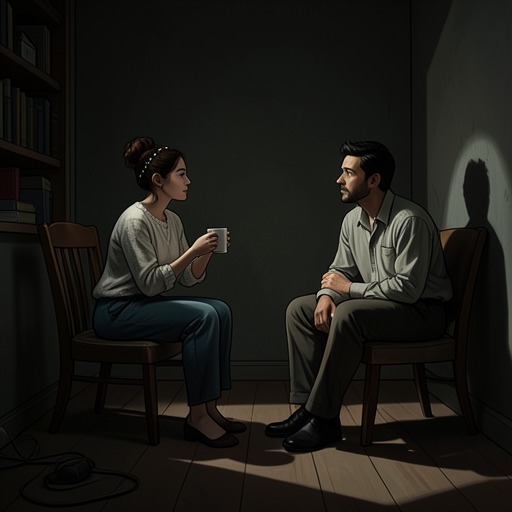
The gathering is also crowded with unresolved relationships. Song Yun’er is attentive to Lin Yanche, while Cheng Chuchu’s connection with Hua Shuo is sufficiently ambiguous to invite questioning. When Cheng Chuchu leaves for the washroom, Song Yun’er uses the opportunity to ask Hua Shuo about her, probing which of them is stronger and speaking as though she is defending Cheng Chuchu. Hua Shuo answers that he is innocent, but his evasive helplessness leaves the emotional tension intact. The conversation is interrupted when a waiter rushes in to report that a customer in their room has been beaten by a woman. Because Cheng Chuchu is the only person absent, the report immediately turns suspicion into collective alarm.
What Happens at the Clubhouse
The big man follows the waiter out, and Su Xiangwan, worried by the sudden report, asks Lu Xun to accompany her. The location of the incident is already surrounded by people when they arrive, suggesting that the most intense part of the battle has passed before the principal observers reach it. The scene is therefore presented through its aftermath: physical disarray and emotional possession reveal more than a complete account of the blows would have done.
Hua Mu is protecting Cheng Chuchu. Her hair is disordered, and she is crying, which places her simultaneously in the position of aggressor and apparent victim of the scene’s consequences. Nearby, Lin Yanche is tightly embracing Su Qingrou. Su Qingrou remains impulsive and tries to move toward Cheng Chuchu, but Lin Yanche restrains her. Her demand that he let go and accept that they have nothing to do with each other anymore turns the public fight into a direct confrontation between former intimacy and present rejection.
Lin Yanche answers with an explicit threat, warning Su Qingrou that if she continues to be stubborn, he will not let her go that night. The threat immediately quiets her. The shift is stark: she enters the scene ready to act, but his physical hold and intimidating words restore his control over her movement. The conflict thus changes value from social entertainment to personal danger, and from spectacle to coercion. Hua Mu attempts to end the public display by telling the crowd to disperse, treating the onlookers’ fascination as another form of intrusion into an already volatile situation.
Intervention and Competing Claims
The incident also draws Song Yun’er into a separate struggle over information. After learning that Su Qingrou had been present, she asks whether Su Xiangwan invited her. The question reveals Song Yun’er’s assumption that the confrontation must have been arranged or enabled by someone within Lu Xun’s circle. Su Xiangwan does not answer directly; instead, she tightens her arm around Lu Xun’s waist and asks him how she should respond. The gesture makes their marital alliance visible at the very moment Song Yun’er is attempting to assign blame.
Lu Xun rejects the premise that Su Qingrou’s presence required an invitation. He tells Song Yun’er that no one asked her to come and that no one could have stopped her, then criticizes her for losing control whenever she cannot find Lin Yanche and denouncing others for their supposed crimes. His response turns the inquiry back upon Song Yun’er: her anxiety about Lin Yanche is treated not as evidence of conspiracy but as a recurring pattern of possessive disarray. Lu Xun then leaves with Su Xiangwan, while Hua Shuo remains behind to send Cheng Chuchu back later. The dispersal separates the witnesses from the people still caught inside the conflict, but it does not resolve the relationships that produced it.
Consequences and Aftermath
The Yutian Clubhouse Conflict has no clean reconciliation. Cheng Chuchu is removed from the immediate crowd under Hua Mu’s protection, while Su Qingrou is silenced and held by Lin Yanche rather than freely restored to safety. The scene’s outcome therefore preserves the underlying imbalance: the visible fight ends, but the possessive structures surrounding the women remain active. Protection and restraint look superficially similar, yet the narrative places them beside one another so that their difference becomes morally unstable.
The event also intensifies the contrast between public dignity and private humiliation found elsewhere in the same relationship network. Song Yun’er later describes herself as abandoned and claims that she has received her due retribution, while Lu Xun responds with cold mockery and asks her to confront the ugliness of what has happened. Su Qingrou’s suffering is likewise made bodily and undeniable when Su Xiangwan sees her silent tears and the deep and shallow kiss marks on her body. These surrounding revelations give the clubhouse incident a larger emotional frame: the fight is not an isolated outburst but one manifestation of a world in which romantic failure is repeatedly converted into public shame, physical possession, or retaliatory pain.
The conflict’s repercussions extend into later domestic and relational tensions. Su Xiangwan becomes ill with a high fever after a night in which she sleeps without clothes and kicks off her blanket, forcing her to ask Manager Wu to buy antipyretic medicine. Su Qingrou considers a small engagement ceremony with Jin Zhengnan, partly to serve the interests of their two companies, while still worrying about Lin Yanche’s reaction. Lu Xun must explain that Shen Yiyun is his adopted uncle’s child and therefore his cousin, because Su Xiangwan’s distrust has been sharpened by earlier incidents involving Song Yun’er. At the same time, Chu Fei openly tells Lu Xun that he considers him an eyesore because Chu Fei likes Su Xiangwan and prefers the process of pursuing her. Each later dispute repeats the clubhouse pattern in another register: a relationship is named, challenged, defended, and recast as a claim of ownership.
Narrative Significance
As a scene, the conflict is driven by a rapid value shift. The group begins with leisure, drinking, and dice; the unexpected report converts amusement into alarm; the arrival at the scene converts curiosity into evidence of violence; and Lin Yanche’s threat converts intervention into submission. The gap between the expectation of a harmless night out and its result supplies the event’s dramatic energy. What should have been a controlled social ritual becomes a test of who may protect whom, who may speak for whom, and whose refusal will be respected.
The clubhouse also exposes the unstable boundary between kinship language and romantic desire. Elsewhere, Lu Xun explains Shen Yiyun as a cousin because she is the child of his adopted uncle, while Chu Fei insists that apparent familial closeness does not prevent desire when no blood relationship exists. Su Xiangwan, in a later intoxicated exchange, identifies Lu Xun as her husband, and she objects when he treats a non-blood relative as merely a harmless family connection. These surrounding disputes make the clubhouse confrontation part of a continuing argument about whether titles such as cousin, sister, wife, or former lover describe genuine limits or merely provide socially acceptable coverings for attachment and jealousy.
The event’s lasting importance is therefore structural rather than merely physical. It gathers the novel’s recurring conflicts—jealousy, broken intimacy, the need for protection, the threat of coercion, and the demand for marital loyalty—into one crowded public space. The crowd disperses, but the emotional contagion remains: Cheng Chuchu is left crying, Su Qingrou is subdued, Song Yun’er is suspicious, and Su Xiangwan and Lu Xun depart together under the sign of their marriage. The fight ends in the room; its claims continue through the relationships that brought everyone there.